October 7, 2026
How to clean a silicone glasses case, and the lenses inside
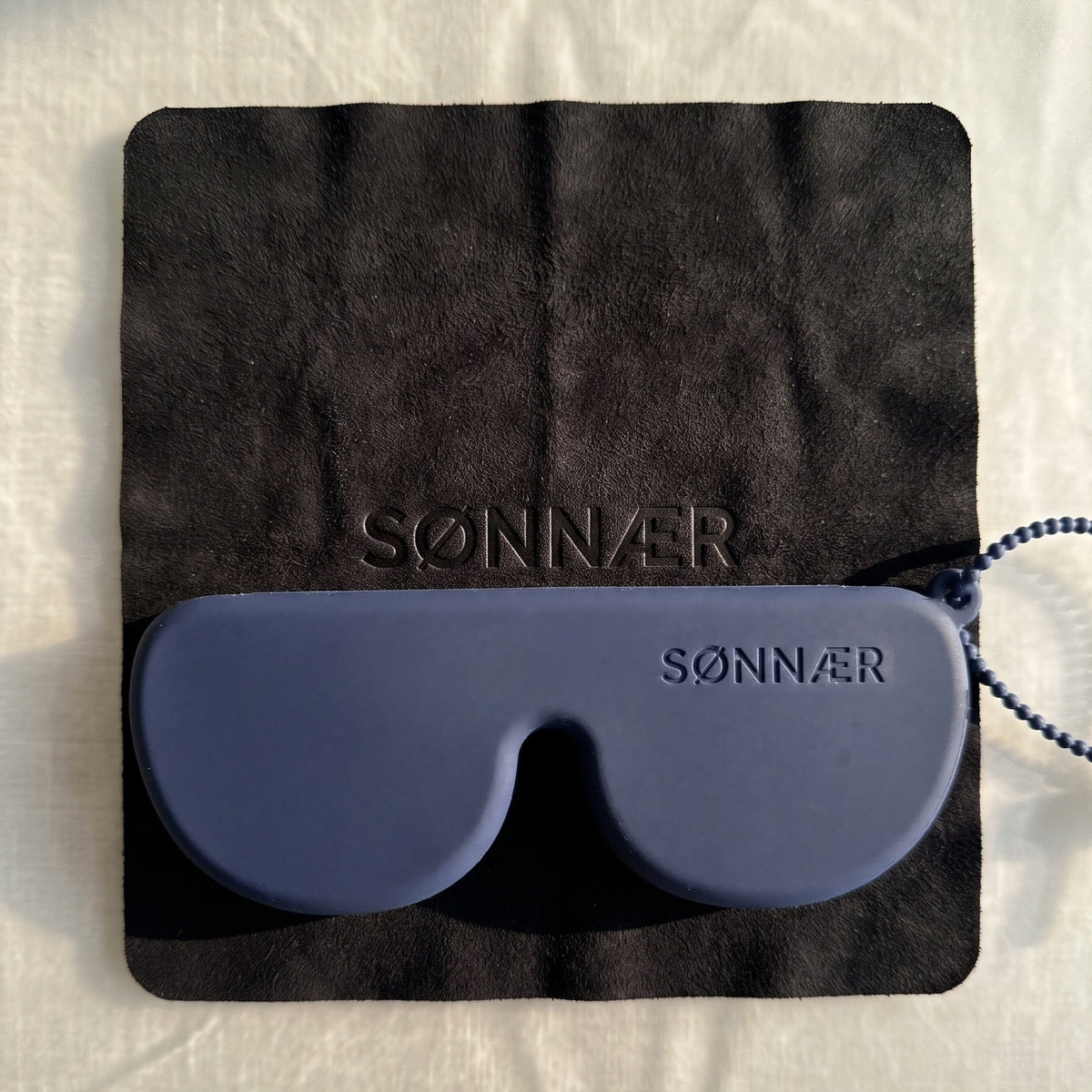
A case spends its life in pockets and bags, so it collects what they hold: sand, lint, sunscreen, the dust of a car's door pocket. The good news about silicone is that it washes. The lenses inside need a little more care, because most scratches happen while cleaning, not while wearing.
Washing a silicone case, step by step
- Take the glasses out and rinse the case under lukewarm water.
- Wash it with a drop of mild soap, using your fingers. Work into the opening at the back, where sand likes to settle.
- Rinse until the water runs clear.
- Shake off the water and let it air-dry completely before your glasses go back in.
That is all. Once a week is plenty for a case that goes to the beach; once a month for one that lives on a desk.

Sand, sunscreen and lint
- Sand. Rinse before you wipe. Rubbing a sandy case, or a sandy lens, is how scratches start.
- Sunscreen. Wash it off soon, with soap rather than water alone, especially on lighter colours like Cream. Left for days, oily marks are harder to lift.
- Lint and dust. Silicone attracts a little of both. A rinse and air-dry removes it; a fluffy towel puts it back.
What not to use on silicone
- Solvents, alcohol and household cleaners. Water and mild soap are all it needs.
- Abrasive sponges and scouring pads. They dull the matte finish.
- The dishwasher and very hot water. Wash it by hand.
- Putting glasses into a damp case. Water left inside dries into marks on the lenses.
Cleaning the lenses without scratching them
Grit on a lens is like sandpaper. Wipe it dry and you drag the grit across the surface. So the order matters: rinse first, then wash, then dry.
- Rinse the lenses under lukewarm tap water to lift dust and sand.
- Wash with a drop of mild washing-up liquid, rubbed in gently with your fingertips, front and back, and along the frame where it meets the lens.
- Rinse again until no soap is left.
- Dry with a clean, soft cloth made for lenses. Pat first, then wipe lightly.
If your lenses have special coatings, your optician's advice comes first.
What never to use on lenses
- Your shirt, tissues or paper towels. Their fibres are rougher than they feel and leave fine scratches over time.
- Window or glass cleaner. Ammonia and similar chemicals can damage lens coatings.
- Your breath alone. It fogs the lens but does not lift grit, so you end up wiping dirt around.
- Hot water. Very hot water can harm some coatings.

Looking after the cloth
A lens cloth collects dust and skin oil too, and a dirty cloth smears instead of cleaning. Rinse it in lukewarm water with a little mild soap now and then, rinse well, and let it air-dry. Skip fabric softener: it leaves a film that ends up on your lenses.
Every SØNNÆR case arrives with a suede-finish cleaning cloth, embossed with our mark, for exactly this.
Questions people ask
Can I put a silicone glasses case in the dishwasher?
We do not recommend it. Hand-washing with lukewarm water and mild soap is quicker, gentler on the finish, and all the case needs.
How often should I clean my glasses case?
When it looks or feels dusty, and always after the beach. For most people that is every few weeks.
How do I get sunscreen off a light-coloured case?
Wash it soon with a drop of mild soap and lukewarm water, using your fingers, then rinse and air-dry. Soap lifts the oil that water alone leaves behind.
Can I clean my glasses with a tissue?
In an emergency, on a lens you have rinsed first. As a habit, no: tissues and paper towels leave fine scratches over time. A soft lens cloth is better.
A clean case, a clear lens. That is all the care it asks for.